What DMOs Will Look Like in 2030 – An AI Perspective
Introduction
In this article, we explore what will DMOs look like 2030 and how AI is already reshaping destination organizations and their role in the visitor economy.
What DMOs Will Look Like in 2030: How AI Reshapes the Role, Structure, and Mission of Destination Organizations
Reading time: ~15 min
- What will DMOs look like 2030
- The role shifts from promotion to orchestration
- Search will no longer reward generic destination content
- The structure gets smaller, flatter, and more analytical
- The mission expands from growth to stewardship
- KPIs will shift whether DMOs like it or not
- Stakeholder relationships become more operational
- The website becomes one surface, not the center
- A mini FAQ for DMO leaders
If you want a serious answer to what will DMOs look like 2030, start by dropping the old mental model. The classic DMO as a campaign machine with a content calendar, a media plan, and a visitor guide is running out of road. AI is not just adding efficiency. It is changing what travelers see, how they plan, who controls discovery, and what destinations are actually expected to do.
For ongoing insights, visit Destination Marketing AI.
By 2030, the strongest DMOs will look less like tourism promotion offices and more like destination operating systems. They will still market the place, but marketing will no longer be the center of gravity. Data, coordination, visitor flow management, and machine readable destination intelligence will.
That shift matters because the old success formula is already breaking. More content does not guarantee visibility. More visitors does not equal better outcomes. More campaigns do not fix weak infrastructure, poor distribution, or resident friction.
What will DMOs look like 2030
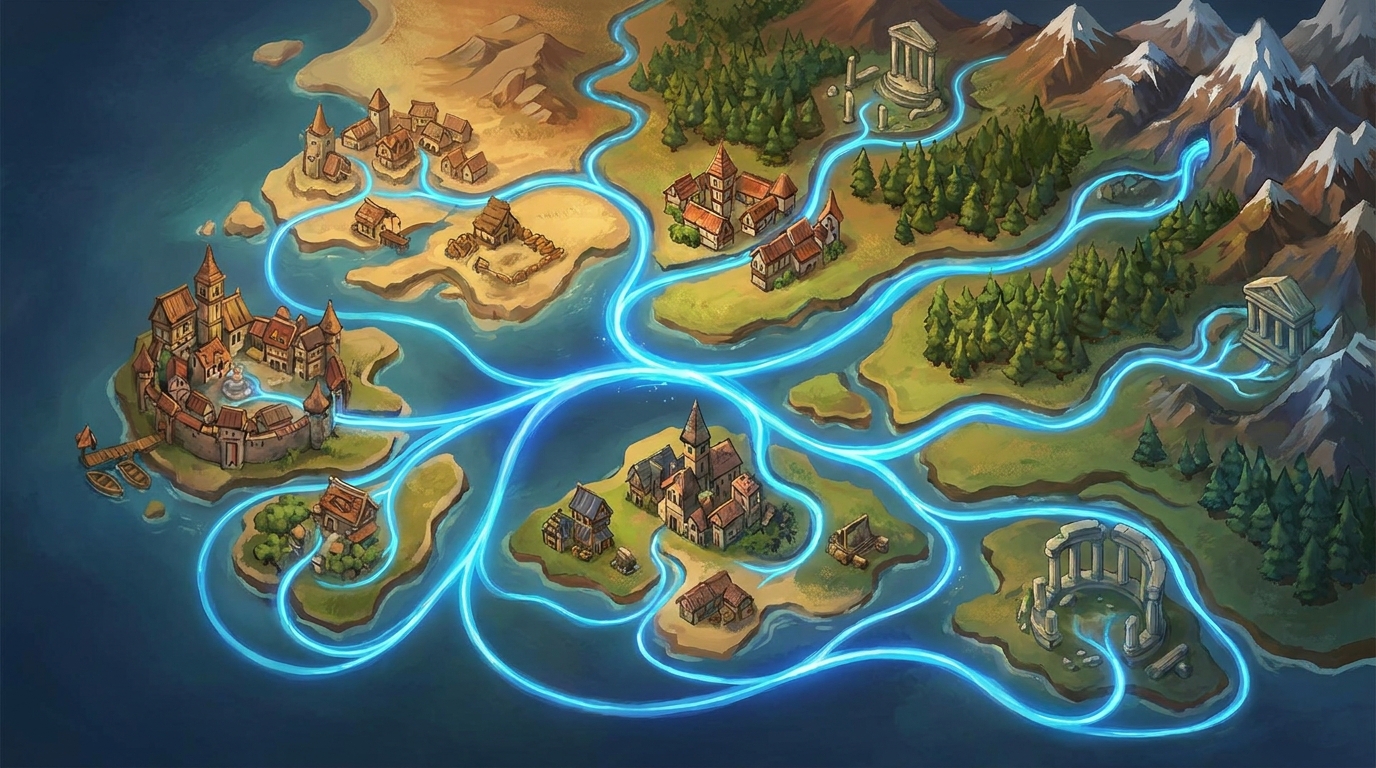
Defining characteristics of the 2030 DMO
The short answer is this. Smaller teams. Bigger data responsibilities. Fewer repetitive production tasks. More strategic control over destination intelligence, stakeholder coordination, and real time visitor guidance.
Most industry commentary still understates the scale of change. It frames AI as a helpful tool for content creation or chatbot support. That is too narrow. The real disruption is structural. AI is moving the DMO from broadcasting messages to managing systems.
By 2030, the AI native DMO will have five defining traits. First, it will operate as a management hub, not just a promotion office. Second, it will publish structured destination knowledge, not just editorial content. Third, it will measure outcomes across demand, dispersal, resident impact, and conversion quality, not just impressions and website traffic. Fourth, it will rely on cross functional teams where strategy, data, content, partnerships, and governance are tightly connected. Fifth, it will serve both visitors and the place itself.
That last point is the most important. For years, many DMOs were rewarded for volume. That logic is increasingly unworkable. Destinations facing congestion, housing pressure, labor strain, and resident fatigue cannot keep treating success as a top of funnel growth problem.
The role shifts from promotion to orchestration
From storytelling to systems management
The DMO of 2030 will still tell stories. But storytelling will no longer be the main value proposition.
Its real job will be orchestration. That means aligning demand with capacity, moving visitors across time and space, supporting local businesses with better intelligence, and reducing friction across the visitor journey. Industry and policy signals already point in this direction, with destination organizations moving from pure marketing toward broader management and stewardship.
Think about a common travel scenario. A family asks an AI assistant where to go in southern Europe in October for mild weather, fewer crowds, good rail access, and child friendly activities. The assistant does not browse your homepage the way a human once did. It assembles an answer from structured signals, trusted entities, reviews, schedules, product feeds, local facts, and authoritative destination content.
That changes the role of the DMO immediately. Your destination is no longer competing only on campaign creativity. You are competing on whether AI systems can understand, trust, and recommend your place accurately.
If you do not adapt, your destination becomes less visible exactly when travelers think they are seeing the full market.
Search will no longer reward generic destination content
Why generic destination content loses value
One of the most common assumptions in tourism is that more content equals more discoverability. That assumption is weakening fast.
AI powered search and recommendation systems do not need another vague article about the “top 10 things to do.” They need precise, updated, structured, specific information they can parse and recombine. A page that says your destination has “something for everyone” is almost useless in an AI mediated journey. A page that clearly explains shoulder season weather patterns, neighborhood differences, accessibility conditions, family suitability, transport logic, and booking windows is far more valuable.
This is where many DMOs will fall behind. They still think in pages and campaigns. AI systems think in entities, relationships, attributes, and confidence.
| Old DMO content model | 2030 DMO content model |
|---|---|
| Inspirational copy | Structured destination intelligence |
| Seasonal campaigns | Continuously updated knowledge assets |
| Static visitor guides | Interactive planning support |
| Website centric publishing | Multi surface distribution for search, AI assistants, maps, and partners |
| Volume of content | Reliability, specificity, and machine readability |
The overlooked insight is this. The future winner is not the DMO with the best brand video. It is the one with the cleanest destination knowledge graph, the strongest content architecture, and the clearest signals across discovery environments.
If DMOs ignore this, they will keep producing polished assets that humans rarely see and machines cannot use. That is not a content problem. It is a distribution failure. We explore this in more depth in our work on visibility and discovery.
The structure gets smaller, flatter, and more analytical
By 2030, many DMO teams will be smaller in headcount for repetitive production work and stronger in high judgment roles.
AI will absorb a growing share of drafting, repurposing, FAQ handling, reporting, tagging, translation, itinerary assembly, and campaign optimization. That does not make the DMO less important. It raises the bar for what human staff must do.
The winning team will not be built around channel silos. It will be built around capability clusters.
- Data strategy and destination intelligence
- AI oversight and workflow design
- Structured content operations
- Stakeholder enablement and partner coordination
- Governance, risk, and quality control
- Experience design across discovery, planning, and in destination support
This will be uncomfortable for organizations built around old departmental lines. The social media manager, PR lead, website editor, and research analyst will not disappear, but their work will converge. The DMO will need people who can move between narrative, systems, and operations.
If you do not restructure, AI will simply expose organizational drag. Teams will generate more output faster, but with no shared model of quality, no data standards, and no strategic focus. That creates noise, not advantage.
The mission expands from growth to stewardship
This is where the conversation gets politically sensitive. Many DMOs still act as if their mission is fundamentally demand generation. That is too limited for the 2030 reality.
The mission is broadening toward stewardship. Not as a slogan, but as an operating requirement.

Why? Because destinations now have to balance visitor spend with congestion, seasonality, accessibility, sustainability, labor capacity, and resident sentiment. AI makes this more manageable because it improves forecasting, segmentation, and flow monitoring. But it also makes the trade offs more visible. If a destination has a crowding problem, better marketing is not the answer.
The 2030 DMO will be expected to answer harder questions. Which visitor segments create the most local value with the least pressure? Which periods need demand stimulation and which need demand deflection? Which neighborhoods should be promoted, protected, or deprioritized? Which experiences are accessible in theory but not in practice? Which local businesses are invisible in digital discovery despite strong fit for traveler intent?
These are not branding questions. They are destination performance questions.
If DMOs fail to adapt, two things happen. First, they lose legitimacy with residents and policymakers. Second, they become tactically busy but strategically marginal.
KPIs will shift whether DMOs like it or not
What will DMOs look like 2030 if measurement does not change? Ineffective.
The old KPI set is too easy to game and too weak to guide decisions. Website sessions, brochure downloads, media reach, and social engagement tell you very little about whether the destination is becoming more resilient, more discoverable, or better matched to demand.
The new KPI framework needs to connect marketing with management.
Expect leading DMOs to track measures such as qualified demand by segment, off peak conversion, geographic dispersal, answer visibility in AI mediated discovery, partner inclusion in recommendation layers, resident friction indicators, and visitor journey completion quality.
A simple example makes the point. If your spring campaign increases arrivals by 8 percent into already crowded zones while independent attractions two miles away remain underused, that is not success. It is poor system design.
The DMO that still reports reach while ignoring flow quality will lose credibility. The one that can show how AI assisted content and routing improved dispersal, booking quality, and partner distribution will gain budget authority.
For organizations trying to build this capability, our perspective on intelligence and forecasting is directly relevant.
Stakeholder relationships become more operational
Another industry blind spot is the assumption that stakeholder management will remain largely communicative. It will not.
In the 2030 model, stakeholder relationships become data relationships.
Hotels, attractions, venues, transport providers, event organizers, municipalities, and local businesses will need to contribute cleaner, more current, more structured inputs. Opening hours, accessibility details, capacity constraints, event timing, family suitability, mobility options, and neighborhood level context all become part of the destination intelligence layer.
This changes the DMO’s position. You are not just promoting stakeholders. You are helping standardize the information environment that determines whether they are discovered at all.
That is a major power shift. The DMO that owns a trusted operating layer of destination knowledge becomes more useful to partners. The DMO that only offers campaign exposure becomes easier to bypass.
If you do not build this role, platforms and AI intermediaries will define your destination on your behalf, often with incomplete or outdated information.
The website becomes one surface, not the center
Many DMOs still behave as if the website is the destination’s digital headquarters. It will remain important, but it will no longer be the primary battleground.
Travel discovery is fragmenting across AI assistants, maps, social search, booking ecosystems, messaging interfaces, and agentic planning tools. Travelers increasingly expect direct answers, shortlist generation, dynamic recommendations, and itinerary support. They do not want to hunt through nested navigation to decode the destination.
That means your website must evolve from brochureware into source infrastructure. It should feed multiple environments with trusted, specific, updated content. The shift is architectural before it is visual. If your pages are beautifully designed but your data is weak, you will underperform in the channels that matter most.
This is why data structure is no longer a technical side issue. It is central to destination competitiveness.
A mini FAQ for DMO leaders
Will AI replace DMO teams
No. It will replace a large share of low judgment output and expose teams that were built around production volume instead of strategic value.
Will smaller teams mean weaker organizations
Not if the model is redesigned properly. Smaller teams with better workflows, stronger data discipline, and clearer priorities can outperform larger teams stuck in manual execution.
Does brand still matter in 2030
Yes, but brand without discoverability and utility will weaken. A destination needs emotional distinctiveness and machine legibility.
What is the biggest mistake DMOs will make
Treating AI as a marketing tool instead of an organizational redesign challenge.
What is the most overlooked opportunity
Using AI to improve partner visibility below the headline attraction layer. Many destinations have strong local supply that remains digitally invisible because the information is incomplete, generic, or poorly structured.

What this transformation means for DMOs
The DMO of 2030 will not win by publishing more and shouting louder. It will win by becoming more useful, more structured, and more operationally credible. The organizations that adapt will act as AI enabled destination management hubs, balancing discovery, distribution, stewardship, and partner coordination. The ones that do not will become content factories with declining influence. If you want a practical next step, explore our research across the future of travel and discover our solutions.