Destination AI Campaign Case Studies | Real-World Examples
Introduction
In this destination AI campaign case study overview, you will see how leading destinations are already using AI to redesign their marketing campaigns and demand-generation models.
Case Studies: How Leading Destinations Use AI for Marketing Campaigns
Reading time: ~10 min – this destination AI campaign case study guide analyses how leading destinations use AI for marketing campaigns.
- What a Destination AI Campaign Case Study Now Needs to Prove
- The Seven Case Study Patterns Every DMO Should Understand
- Orlando and the Shift from Broad Audience Buying to Intent Prediction
- What These Case Studies Collectively Tell Us
- Mini FAQ for DMO Teams Evaluating AI Campaign Case Studies
What a Destination AI Campaign Case Study Now Needs to Prove
The typical discussion about AI in tourism remains too shallow. Most of the industry focuses on faster content production, better chatbots, and campaign efficiency. The deeper story is that AI is reshaping how travelers discover destinations, how media is targeted, and how destination visibility is distributed across search, platforms, and machine-generated answers.
A serious destination AI campaign case study therefore goes beyond one clever activation. It must show whether a destination management organization (DMO) can still shape demand when the old discovery systems are breaking. Across Orlando, Madrid, VisitScotland, Dubai, Singapore, Amsterdam, and Vienna, the lesson is consistent: AI is not a marketing add-on; it is becoming part of the operating system for demand generation.
A weak case study merely notes that AI sped up content production. That is not enough—speed is not a strategy. A useful case study answers three harder questions:
First, what traveler behavior changed. Second, what part of the marketing model broke because of that change. Third, what the destination replaced it with. For practical examples, see the seven case study patterns identified below.
The old assumption was simple: publish inspiring content, buy reach, drive clicks to the website, and measure sessions. That model is decaying. Travelers now jump between TikTok, Google, AI summaries, OTAs, maps, review platforms, and messaging interfaces before they ever reach a destination site—and sometimes they never reach it at all.
Destinations International has already highlighted this shift in measurement. Leading organizations are moving away from raw traffic as the main success metric and toward engagement, conversion, usefulness, and even large language model (LLM) impressions and referrals. If your team is still reporting sessions as the headline KPI, you are measuring the part of the journey that matters less every quarter.
The Seven Case Study Patterns Every DMO Should Understand
The destinations in this article differ in geography, budget, and brand maturity, yet their AI use cases cluster around repeatable patterns. These are signals of where destination marketing is heading.
| Destination | AI case study pattern | Primary campaign focus |
|---|---|---|
| Orlando | Shift from broad audience buying to intent prediction | Using AI-based intent modeling to prioritize travelers close to a decision |
| Madrid | Move from translation to contextual personalization | Tailoring messaging, imagery, and itineraries to specific visitor motivations |
| VisitScotland | Rise of AI-assisted discovery outside the website | Engineering content for machine readability and answer engines |
| Dubai & Singapore | Operationalization of AI at scale | Embedding AI across planning, analysis, creative, and service delivery |
| Amsterdam & Vienna | Use of AI beyond pure promotion | Balancing demand, seasonality, and crowd pressure with campaign optimization |

1. Orlando and the Shift from Broad Audience Buying to Intent Prediction
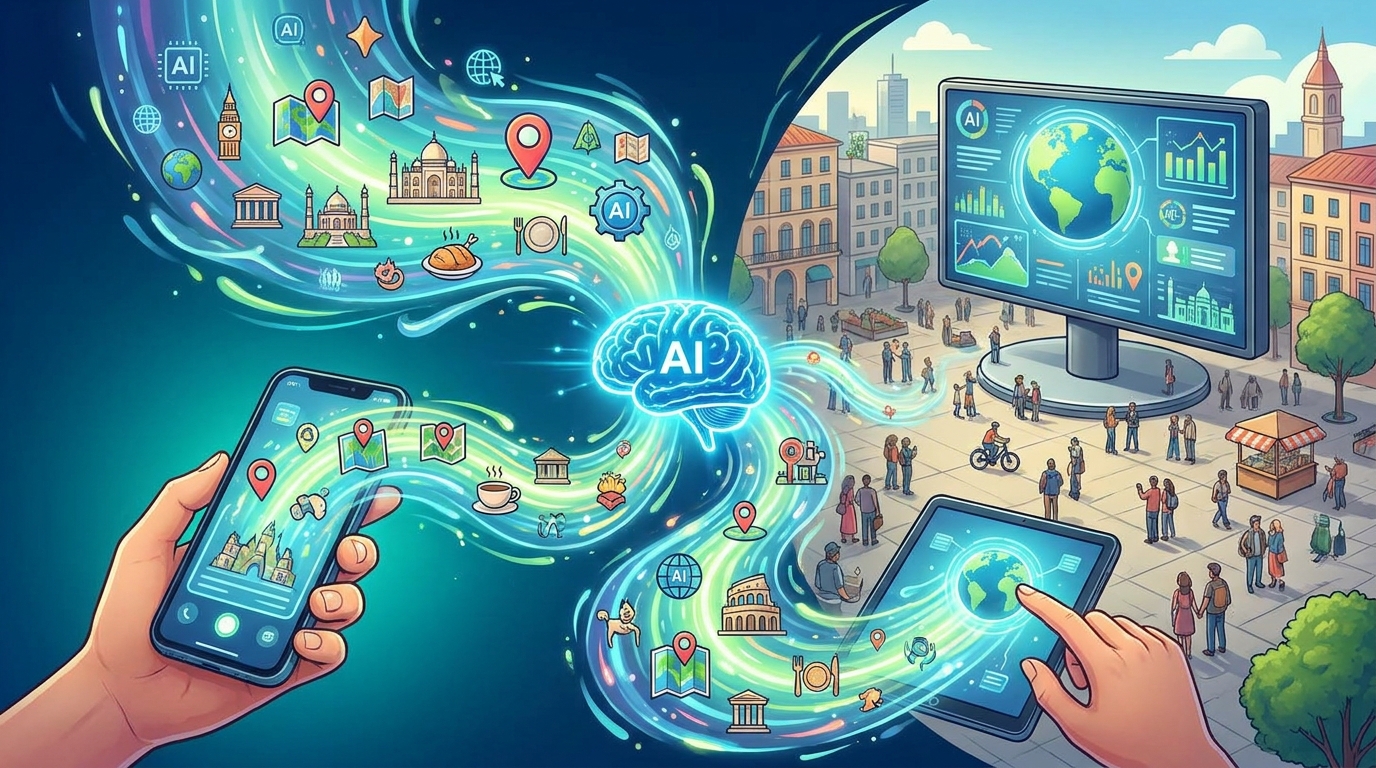
A leisure destination like Orlando wins not by reaching the most people but by finding travelers whose planning signals indicate they are close to a decision. AI-based intent modeling changes campaign structure: traditional demographic targeting becomes weaker as privacy changes and cookie loss reduce precision. AI replaces that logic by reading content-consumption patterns that correlate with real trip planning, turning media buying from audience category buying into probability-of-visit buying.
2. Madrid and the Move from Translation to Contextual Personalization
Personalization is no longer about translating one campaign into many languages. AI lets Madrid tailor messaging, imagery, and itinerary framing around specific visitor motivations. Modular content is built for distinct narratives—couples planning a spring city break, remote workers extending a conference stay, multigenerational families, and so on—so that the campaign remains persuasive at comparison stage, not merely visible.
3. VisitScotland and the Rise of AI-Assisted Discovery Outside the Website
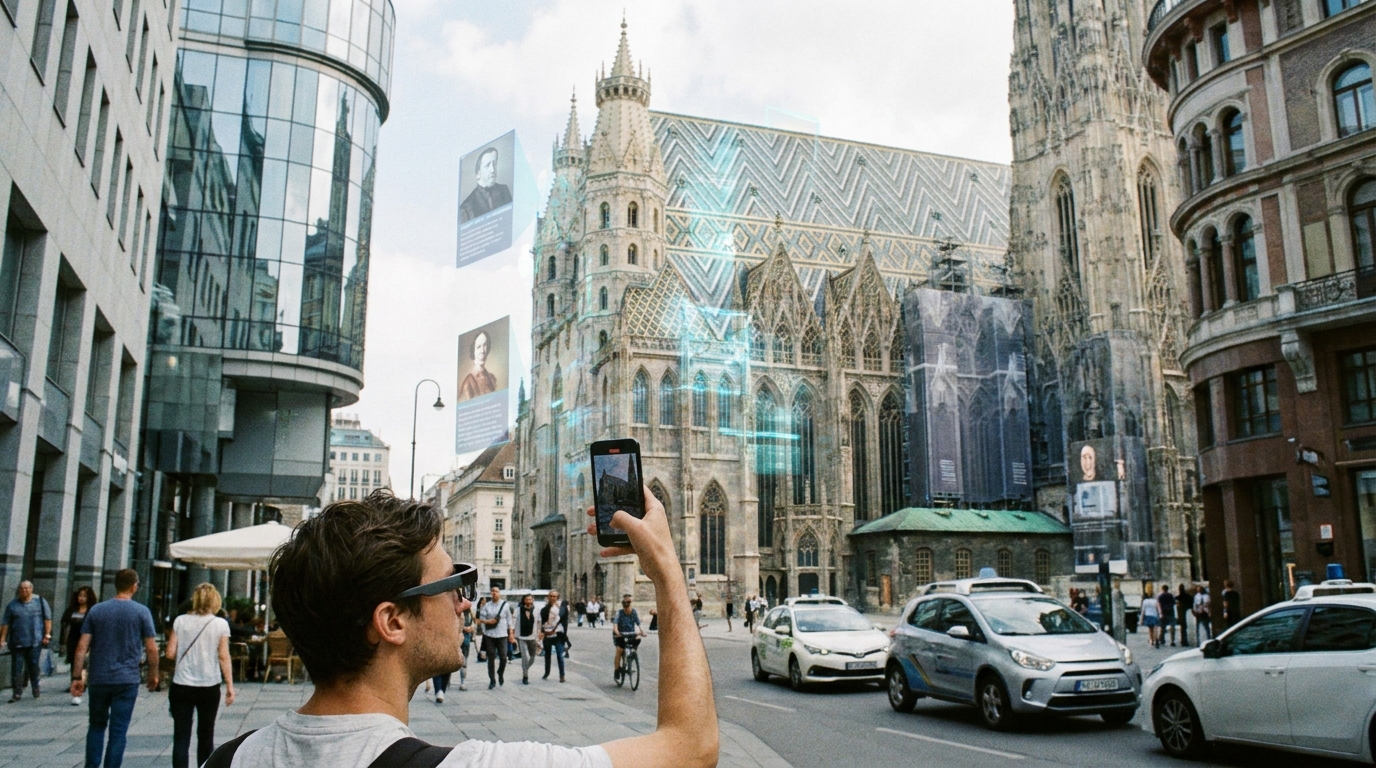
The destination website is now only one node in a distributed information environment. AI-powered answers in search give travelers ideas and recommendations without a click-through. Content therefore must be engineered for machine readability—tight entity structure, question-based formatting, strong internal linking—so that the destination remains visible in answer engines even before a paid or organic click can occur.
4. Dubai and Singapore and the Operationalization of AI at Scale
These mature destinations treat AI not as an experiment but as an embedded system across campaign planning, audience analysis, creative adaptation, and service delivery. The real edge is not budget but organizational integration: data, content, distribution, and testing connect in continuous loops. DMOs that buy isolated tools without system logic will generate activity without compounding advantage.
5. Amsterdam and Vienna and the Use of AI Beyond Pure Promotion
AI can help attract the right visitors under the right conditions, balancing demand, seasonality, crowd pressure, and message relevance. Instead of maximizing reach around iconic attractions, campaigns can redirect attention to shoulder seasons, under-visited districts, or high-value experiences, provided the optimization goal is set correctly.
What These Case Studies Collectively Tell Us
Across these destinations, five shifts stand out:
- Discovery is moving from website-first to platform- and AI-mediated journeys.
- Targeting is moving from demographics to inferred intent and timing.
- Creative is moving from brand consistency alone to contextual relevance.
- Measurement is moving from traffic to contribution, engagement, and assisted influence.
- Competitive advantage is moving from tool access to organizational adaptation.
AI tools are widely accessible, but the ability to redesign planning, workflows, governance, and performance models around the new reality remains scarce.
Mini FAQ for DMO Teams Evaluating AI Campaign Case Studies
What makes a strong destination AI campaign case study
A strong case study shows the original marketing problem, the traveler or platform shift behind it, the AI application used, the business result, and the operational change—not just the deployed tool.
Are chatbots enough to count as AI strategy
No. Chatbots can be valuable, but if discoverability, targeting, and measurement models stay unchanged, the chatbot does not solve the larger strategic problem.
Should DMOs focus more on generative AI content or predictive targeting
Both matter. Generative content scales production; predictive targeting places the right message in front of the right traveler at the right moment. One improves throughput, the other decision influence.
What happens if we wait another year
You will not simply adopt later—you will learn later. The real AI advantage lies in earlier accumulation of data, testing patterns, workflow discipline, and strategic clarity.
AI is replacing parts of the destination marketing model once considered stable. Search behavior is fragmenting, audience targeting is rebuilding around intent, content is judged by machine retrievability as much as human appeal, and campaign success is harder to see if you only track old web metrics. To understand what this means for your destination and where to act first, explore our case studies and partnership insights or discover our solutions.